 Email:
Air filter cartridge manufacturers specialize in the engineering and production of high-precision filtration components designed to remove airborne particulates from industrial gas streams. These manufacturers utilize advanced composite materials and pleating technologies to create barriers that protect sensitive machinery, such as gas turbines and compressors, from contamination. By controlling the pore size and surface area of the filter media, they ensure that critical equipment operates within strict purity parameters.
In heavy industrial environments—ranging from steel blast furnaces to centrifugal compressors—the failure of a filtration system can lead to catastrophic equipment downtime or significant efficiency losses. The challenge for many operators is finding a balance between high filtration efficiency and low pressure drop, as overly restrictive filters can increase energy consumption and strain the system. Selecting the right manufacturing partner is therefore critical to maintaining operational stability.
This technical analysis explores the core capabilities of premium air filter cartridge manufacturers, focusing on material science, design specifications, and procurement criteria. Whether you are managing a centralized air-conditioning system or a high-load diesel engine, this guide will provide the necessary insights to evaluate filter performance and optimize your replacement cycles for maximum ROI.

1Core Technologies in Air Filtration Manufacturing

The efficacy of a filter cartridge depends primarily on the synergy between the media material and the structural design. Leading air filter cartridge manufacturers employ high-efficiency wood pulp fiber materials sourced from North America and Western Europe, which provide a unique combination of small pore size and high air permeability. This allows for the capture of microscopic particles without creating an excessive vacuum that could hinder airflow.
Structural integrity is equally important. The use of electro-galvanized end caps and electroplated diamond mesh center frames prevents rust and corrosion, particularly in humid or chemically aggressive environments. This ensures that the cartridge does not collapse under high-load continuous operation, which would otherwise lead to "blow-through" where unfiltered air bypasses the media.
Furthermore, the sealing mechanism—often utilizing closed-cell elastic neoprene—is critical. A precise seal prevents contaminated air from leaking around the edges of the cartridge, ensuring that 100% of the intake air passes through the filtration medium, thus maintaining the integrity of the downstream equipment.
2Key Performance Indicators for Cellulose Cartridges
When evaluating air filter cartridge manufacturers, the primary metric is the filtration efficiency at a specific particle size, typically measured at 2µm. For high-precision applications, an efficiency of 99.99% is required to protect gas turbines and steam turbines from abrasive dust. This is achieved through advanced folding technology that maintains even intervals between pleats, preventing media bunching.
Flow rate (m³/h) and operating temperature ranges also define the operational envelope. High-quality cartridges are designed to operate in extreme temperatures, often from -30°C to 105°C, ensuring reliability in both arctic and desert environments. The adhesive used in the bonding process must be heat-resistant to prevent degumming during thermal cycling.
Finally, the "dust holding capacity" determines the interval between replacements. By maximizing the filter area (m²) through precise pleating, manufacturers can extend the time between maintenance cycles, reducing the total cost of ownership for the plant operator.
3Industrial Application Scenarios and Requirements
Different industries place varying demands on their filtration systems. In steel blast furnace operations, the focus is on removing heavy particulate matter and fly ash. In these scenarios, cartridges must possess high mechanical strength to withstand the pressure fluctuations associated with heavy industrial cycling.
For centrifugal air compressors and gas turbines, the requirement shifts toward absolute purity. Even a small amount of floating dust can cause erosion of turbine blades over time, leading to significant loss of efficiency. Here, the use of imported special air filter composite papers is non-negotiable to ensure a near-perfect barrier.
Centralized air-conditioning systems in clean-room environments also rely on these cartridges to maintain air cleanliness. In these cases, the emphasis is on consistent flow and the absence of fiber shedding from the filter media itself, which could otherwise contaminate the indoor air quality.
4Comparative Analysis of Filtration Metrics
Analyzing the data between standard industry filters and those from specialized air filter cartridge manufacturers reveals a clear divergence in long-term performance. While generic filters may meet initial efficiency specs, they often suffer from rapid pressure increase as the surface pores clog unevenly.
Specialized cartridges utilize optimized pore distributions that allow for "depth filtration." This means particles are trapped throughout the thickness of the media rather than just on the surface, effectively increasing the volume of dust the cartridge can hold before it requires replacement.
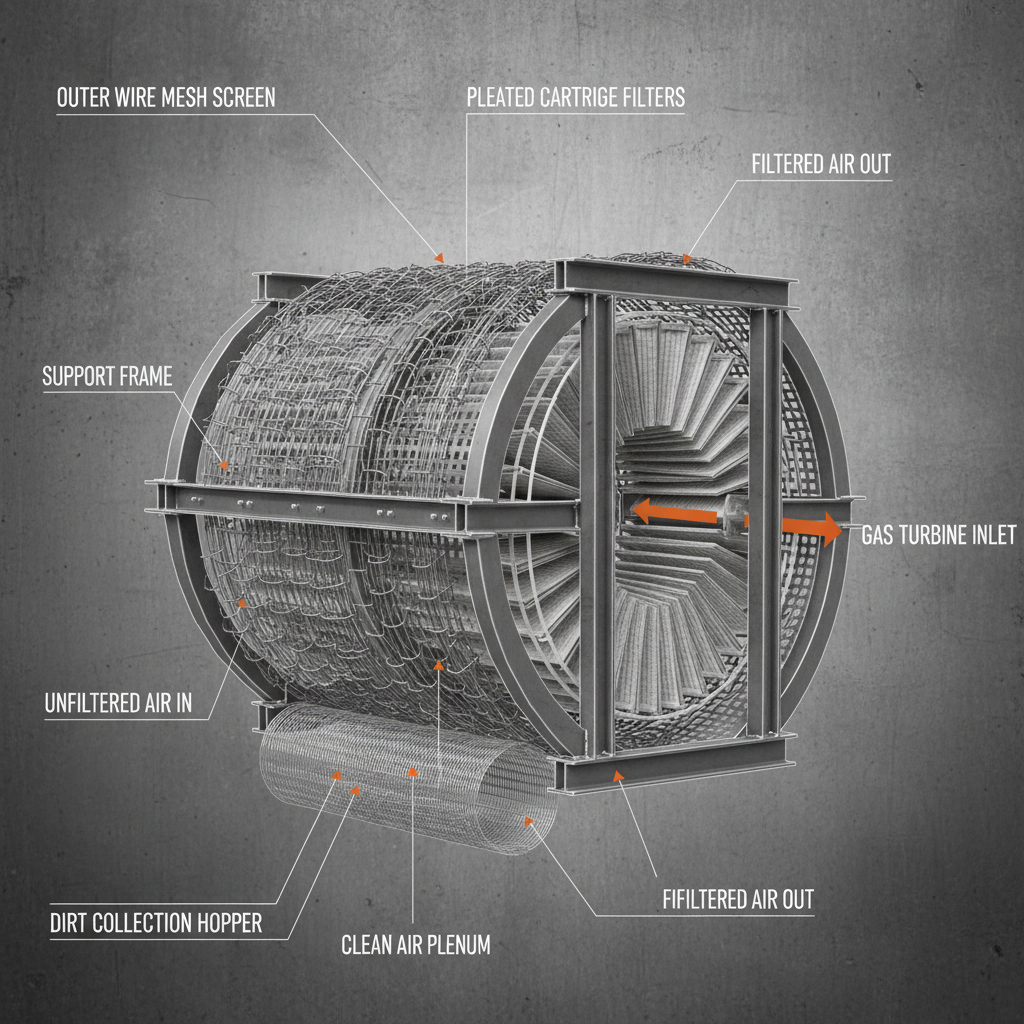
air filter cartridge manufacturers Performance Metrics
As illustrated in the performance metrics, the integration of high-grade electrochemical plates for end covers and the use of premium wood pulp fibers result in higher corrosion resistance and a more stable flow rate over the life of the product, reducing the frequency of emergency shutdowns.
5Procurement and Selection Best Practices
Selecting the right cartridge involves more than matching the external diameter and height. Procurement teams must verify the "Filter Area (m²)" and "Flow (m³/h)" to ensure the cartridge can handle the system's volumetric requirements without creating an excessive pressure drop that could starve the engine of air.
Compatibility is the second major factor. The internal diameter and the sealing ring material (e.g., neoprene) must match the housing perfectly. A gap of even a few millimeters can allow unfiltered air to bypass the system, rendering the high efficiency of the media useless.
Finally, evaluate the manufacturer's quality control process. The use of imported adhesives and standardized folding technology indicates a commitment to durability, ensuring that the bonded parts do not crack under the stress of high-load continuous operation.
6Innovation Trends in Dust Removal Solutions
The industry is moving toward "smart filtration," where sensors are integrated into the housing to monitor pressure drops in real-time. This allows for "condition-based maintenance" rather than "schedule-based maintenance," ensuring that cartridges are replaced exactly when needed, neither too early (wasting money) nor too late (risking equipment).
Material science is also evolving, with the introduction of composite layers that combine the mechanical strength of synthetic fibers with the high filtration efficiency of cellulose. These hybrid media are designed to handle higher moisture levels and more aggressive particulate loads.
Additionally, there is a growing emphasis on sustainability. Manufacturers are exploring biodegradable fibers and recyclable metal frames to reduce the environmental impact of the thousands of cartridges replaced annually in large-scale industrial plants.
7Technical Specifications Comparison
To provide a clear decision matrix, it is helpful to compare different models based on their physical dimensions and performance capacities. For example, models with larger external diameters generally provide a greater filter area, which is essential for high-flow systems.
The following table highlights common specifications for industrial cellulose cartridges, demonstrating how the relationship between height, diameter, and filter area affects the overall flow capacity and efficiency.
| Model Series | Dimensions (mm) | Filter Area (m²) | Efficiency (2µm) |
|---|---|---|---|
| ON-3260 | 320 x 220 x 660 | 10 ~ 25 | 99.99% |
| ON-3265 | 320 x 220 x 650 | 10 ~ 25 | 99.99% |
| ON-3290 | 320 x 220 x 900 | 15 ~ 30 | 99.99% |
| ON-3560 | 350 x 240 x 600 | 12 ~ 28 | 99.99% |
| ON-3590 | 350 x 240 x 900 | 18 ~ 35 | 99.99% |
| ON-4088 | 408 x 292 x 880 | 18 ~ 35 | 99.99% |
When selecting a model, engineers should prioritize the "Flow (m³/h)" and "Filter Area" to ensure the system does not operate under high vacuum conditions, which can lead to premature media failure or reduced engine performance.
Frequently Asked Questions
Conclusion
Maintaining high air purity is fundamental to the longevity and efficiency of industrial machinery. By partnering with experienced air filter cartridge manufacturers who prioritize material quality and precise engineering, companies can significantly reduce downtime and operational costs. The transition from generic filtration to high-efficiency cellulose solutions—characterized by wide-fold designs and corrosion-resistant frames—ensures that critical systems remain protected against the harshest particulate environments.
For procurement teams and plant engineers seeking to optimize their filtration strategy, evaluating specific metrics such as 2µm efficiency and effective filter area is the most reliable path to success. Detailed product specifications and customized solutions can be reviewed at www.onlyfilterelement.com to ensure the perfect match for your industrial application.