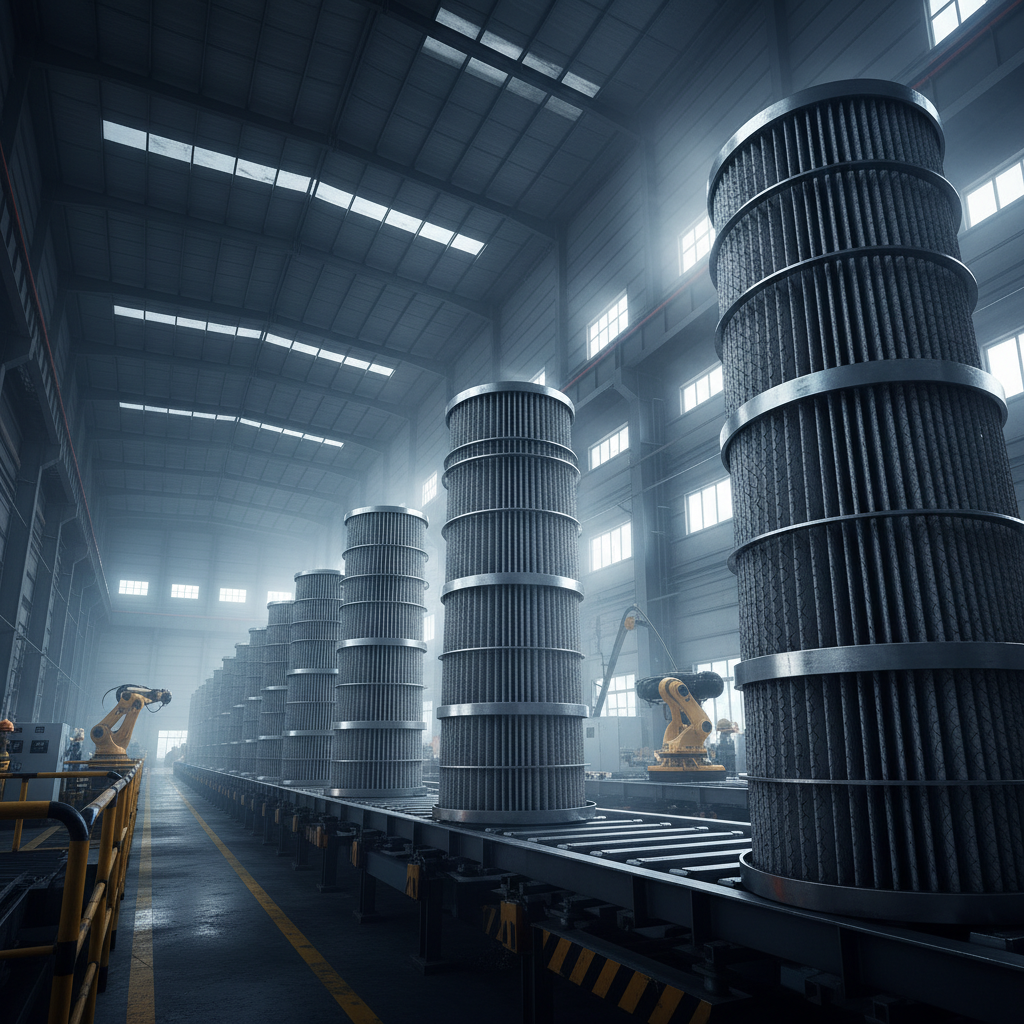
Air purity has become a critical global concern as industrialization and urban growth increase the concentration of volatile organic compounds and harmful gases in our atmosphere. Ensuring a clean breathing environment requires advanced filtration technology capable of capturing microscopic pollutants that standard particulate filters simply cannot stop. The implementation of a high-efficiency activated carbon filter element serves as a primary defense mechanism in modern air purification systems.
From a global perspective, the demand for specialized air filtration is driven by stringent health and safety regulations, such as those set by ISO and various environmental protection agencies. Many industrial sectors struggle with the removal of odors, smoke, and hazardous organic vapors, which can lead to decreased worker productivity and long-term health risks. The challenge lies in selecting a filtration medium that offers both high adsorption capacity and sustainable operational costs.
By integrating a professional activated carbon filter element into ventilation systems, facilities can effectively neutralize harmful gases through a sophisticated dual-action mechanism. This technology not only ensures compliance with industry standards but also fosters a safer, more breathable environment for people in laboratories, medical facilities, and commercial offices.
Understanding the Mechanism of Activated Carbon Filtration
The effectiveness of an activated carbon filter element is rooted in its unique physical structure. At its core is activated carbon, a carbonaceous material that has undergone specialized treatment to create a vast network of internal pores. This highly developed pore structure provides an immense specific surface area, allowing the filter to trap a significant volume of pollutants relative to its size.
The process operates through a dual adsorption mechanism: physical and chemical. Physical adsorption occurs when pollutants are captured within the porous structure of the carbon, while chemical adsorption involves a direct reaction between the pollutants and specific chemical groups on the carbon's surface. This combined approach ensures the efficient removal of organic vapors, odors, and harmful gases.
Core Components and Material Specifications
A professional grade filtration unit is more than just the carbon media; it is a carefully engineered assembly. The primary component is the granular activated carbon, often treated with a special chemical formula to enhance its affinity for specific pollutants. This ensures that the removal efficiency remains high even when dealing with complex gas mixtures.
The structural integrity of the unit is maintained by the filter cartridge material, which is typically available in galvanized steel plate or high-grade stainless steel. The choice of material depends on the environmental conditions, such as humidity levels or the presence of corrosive gases, ensuring the housing does not degrade over time.
Furthermore, the supporting frames are constructed from either cold-rolled steel plates with a professional spray-coating or stainless steel. These frames are designed to be customizable, allowing them to be assembled according to the specific gas processing capacity required by the industrial ventilation system.
Performance Factors Influencing Adsorption Efficiency
The overall efficiency of an activated carbon filter element is heavily dependent on the contact time between the contaminated air and the carbon media. A slower air velocity typically allows for deeper penetration of pollutants into the pores, resulting in higher removal rates for volatile organic compounds (VOCs).
Specialized chemical treatments are often applied to the carbon to target specific hazardous substances. For instance, when the activated carbon filter element is intended for mercury vapor or radioactive gases, the media is impregnated with specific reagents that facilitate a chemical bond, ensuring these dangerous elements are permanently captured.
Environmental factors such as temperature and humidity also play a critical role. High humidity can sometimes occupy the pore spaces intended for gas pollutants, while extreme temperatures can affect the adsorption equilibrium. Therefore, selecting the correct grade of activated carbon is essential for maintaining peak performance in diverse climates.
Global Industrial Applications and Use Cases
In the modern industrial landscape, these filtration systems are indispensable for maintaining health standards. They are extensively used in commercial and industrial central air conditioning systems to remove stench and harmful gases. In regions with heavy chemical manufacturing, these filters protect workers from chronic exposure to acidic and alkaline gases.
Beyond heavy industry, the application extends to sensitive environments such as medical facilities, laboratories, and high-end office buildings. In these settings, the primary goal is to ensure an allergen-free and odor-free atmosphere, which is vital for patient recovery and employee cognitive performance.
Efficiency Comparison of Activated Carbon Filter Element Variants
Long-Term Value and Operational Sustainability
One of the most significant advantages of a professionally designed activated carbon filter element is its cost-effectiveness over the product lifecycle. Rather than replacing the entire unit, these systems often feature replaceable adsorption media. This means the expensive metal shell can be reused indefinitely, while only the carbon is swapped out.
This modular approach not only reduces operational costs but also minimizes industrial waste, aligning with global sustainability goals. By choosing high-quality materials like stainless steel for the frames, companies ensure that their air purification infrastructure lasts for decades, providing a reliable return on investment through consistent air quality.
Future Innovations in Air Purification Media
The future of air filtration is moving toward "smart" materials. We are seeing the development of carbon elements that can be regenerated in situ using thermal or chemical processes, further reducing the need for frequent media replacement. This digital transformation in HVAC systems allows for real-time monitoring of carbon saturation.
Additionally, the integration of nanotechnology is creating carbon structures with even higher specific surface areas. These next-generation materials will allow for smaller filter footprints without sacrificing adsorption capacity, which is essential for the compact urban architecture of the future.
Sustainability is also driving the use of bio-based activated carbons derived from agricultural waste. These eco-friendly alternatives provide similar performance to coal-based carbon while significantly reducing the carbon footprint of the manufacturing process.
Solving Common Challenges in Filter Maintenance
A common challenge in the field is "breakthrough," where the carbon becomes saturated and pollutants begin to pass through the filter. The solution lies in implementing a scheduled replacement cycle based on gas processing capacity and the specific nature of the pollutants being removed.
Another issue is the accumulation of dust on the carbon surface, which can clog the pores and reduce efficiency. This is typically solved by installing a pre-filter (dust removal cartridge) before the activated carbon filter element, ensuring that the carbon is only tasked with gas-phase adsorption.
Proper installation and sealing are also critical. Any air bypass around the filter frames will lead to poor purification results. Using precision-engineered frames and ensuring a tight fit within the ventilation housing are the best ways to maximize the removal efficiency of the system.
Analysis of Filter Materials and Performance across Different Environments
| Material Type |
Adsorption Target |
Durability Rating |
Maintenance Level |
| Standard Granular |
General Odors/VOCs |
Medium (6/10) |
Regular Replacement |
| Chemically Treated |
Acidic/Alkaline Gases |
High (8/10) |
Specialized Monitoring |
| Impregnated Carbon |
Mercury/Radioactive |
Very High (9/10) |
Strict Compliance |
| Stainless Steel Shell |
Corrosive Environments |
Extreme (10/10) |
Low (Shell Reuse) |
| Galvanized Steel Shell |
Standard Industrial |
Medium (7/10) |
Standard Checks |
| Customized Frame |
Variable Flow Rates |
High (8/10) |
System Calibration |
FAQS
While a HEPA filter is designed to capture physical particles like dust, pollen, and mold, an activated carbon filter element is specifically engineered to remove gases, odors, and volatile organic compounds (VOCs) through adsorption. For complete air purification, these two technologies are often used in tandem, with the HEPA filter removing particles and the carbon filter neutralizing gases.
Yes, provided the shell is made of durable materials like stainless steel or galvanized steel. The core adsorption media (the activated carbon) will eventually become saturated and must be replaced, but the metal housing is designed for long-term reuse. This significantly reduces waste and lowers the overall cost of ownership for industrial facilities.
Replacement frequency depends on the concentration of pollutants, the volume of air processed, and the specific type of carbon used. In high-pollution industrial environments, replacement may be required every few months, whereas in office settings, it may last a year. Monitoring for "breakthrough" odors is the most practical way to determine when replacement is necessary.
These are filters where the activated carbon has been treated with specific chemical agents to target gases that are not easily captured by physical adsorption alone. For example, carbon treated with potassium permanganate is highly effective at removing formaldehyde and other specific organic vapors, making it ideal for laboratories and medical facilities.
Absolutely. We provide customizable frames that can be assembled based on your required gas processing capacity and the physical dimensions of your ventilation housing. Whether you need cold-rolled spray-coated steel or full stainless steel, the frames can be tailored to ensure a perfect seal and maximum efficiency.
Yes, very high humidity can lead to water vapor occupying the pores of the activated carbon, which may slightly reduce its capacity to adsorb organic gases. However, our professional-grade carbon is treated to maintain high removal efficiency even in varying environmental conditions, and pre-filtration is recommended to manage moisture and dust.
Conclusion
The activated carbon filter element stands as a cornerstone of modern environmental control, offering a powerful solution for the removal of harmful gases, organic vapors, and unpleasant odors. Through its sophisticated dual-action adsorption mechanism and durable material construction, it provides a sustainable and efficient way to protect human health and maintain strict industrial air quality standards.
As we move toward a future of smarter and greener industrialization, the role of advanced filtration will only grow in importance. We recommend that facility managers prioritize the use of replaceable media and high-grade shells to balance operational costs with peak performance. To ensure your facility meets the highest air purity standards, visit our website: www.onlyfiltercartridge.com

 Email:admin@only-filter.com